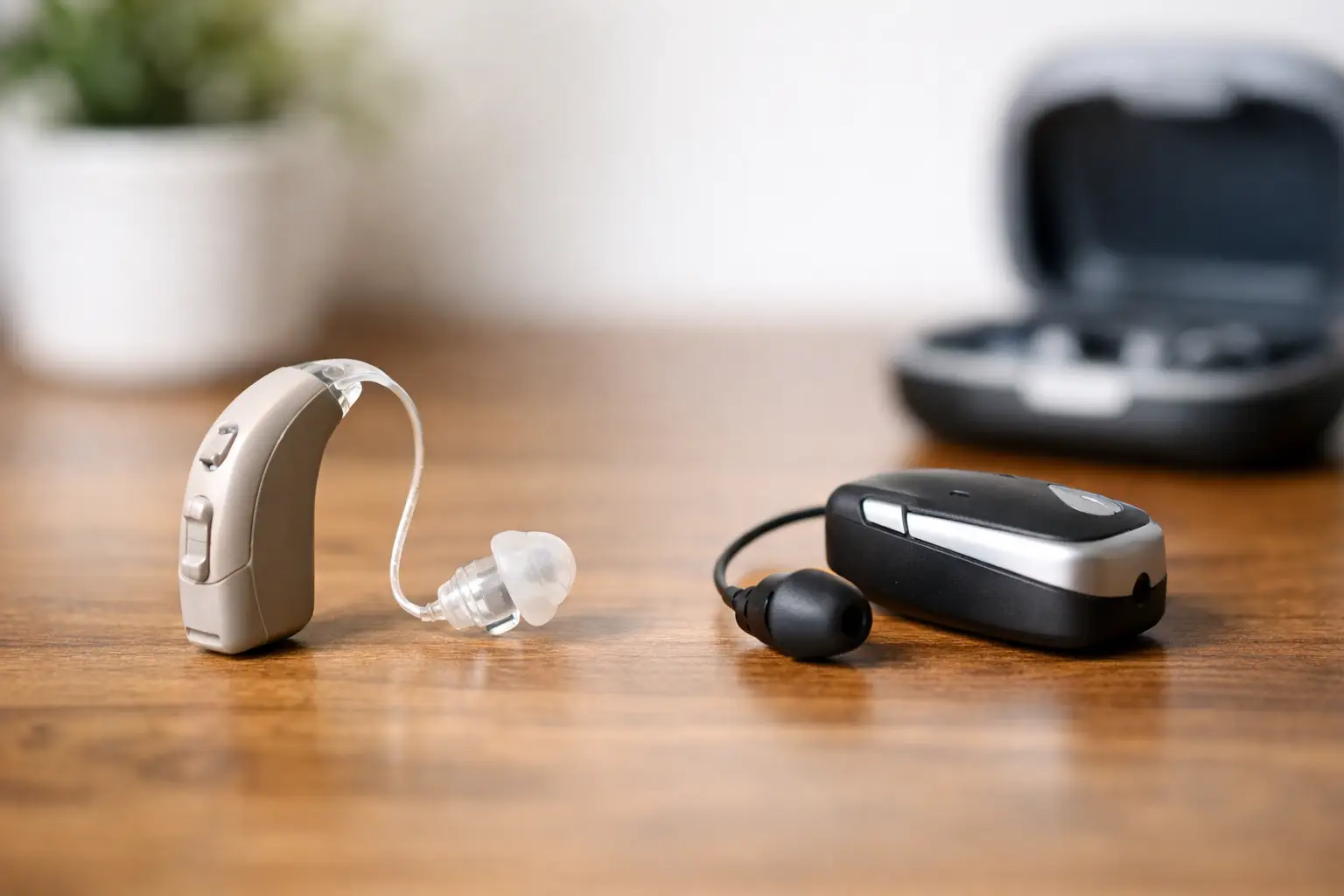
A crowded restaurant, a family gathering, a church service - these are often the moments when people first realize something has changed. Voices seem muffled, background noise feels louder than conversation, and asking people to repeat themselves starts to feel routine. When people begin comparing hearing aids versus amplifiers, they are usually not shopping for a gadget. They are looking for a way to stay connected, confident, and involved in daily life.
That is why this choice matters. On the surface, hearing aids and amplifiers can look similar. Both are worn in or around the ear. Both make sound louder. But they are built for very different needs, and that difference can have a real impact on comfort, clarity, and long-term hearing health.
Hearing aids versus amplifiers: what is the difference?
The simplest way to think about it is this: amplifiers make many sounds louder, while hearing aids are designed to help address hearing loss.
An amplifier, often called a personal sound amplification product, boosts environmental sound in a broad way. It can make conversations louder, but it can also make dishes clattering, traffic noise, television audio, and air conditioning louder too. These devices are generally intended for people with normal hearing who want help hearing specific sounds in certain situations, such as birdwatching or listening from a distance.
A hearing aid is different. It is designed for people with hearing loss and is selected based on their hearing needs. Rather than simply increasing volume across the board, modern hearing aids are made to improve speech understanding, manage feedback, and reduce some background noise. They are much more focused on helping people hear better in real life, not just hear more sound.
That distinction is easy to miss when you are looking at small devices online or seeing low prices advertised. But hearing support is not one-size-fits-all.
Why amplifiers can seem appealing at first
For many people, amplifiers are attractive because they appear simple. They are usually less expensive upfront, easier to buy, and may feel like a low-pressure first step. If someone is unsure whether they have hearing loss, an amplifier can seem like a way to test the waters without making a bigger commitment.
That reaction is understandable. Many adults want a practical solution before they are ready to think about hearing care in a more personal way. They may wonder if what they need is just "a little more volume."
Sometimes that assumption holds people back. Hearing loss is not always a volume problem. It is often a clarity problem. A person may hear that someone is speaking but still struggle to understand the words, especially in noisy places. In those situations, turning everything up may increase frustration instead of reducing it.
What hearing aids are designed to do better
When people talk about the benefits of hearing aids, they often focus on sophistication. That matters, but the everyday benefit is more relatable: hearing aids are designed to support communication.
Many hearing aids can be adjusted to the specific pitches a person struggles to hear. If high-frequency sounds like women's voices, consonants, or grandchildren's speech are harder to catch, the device can be tuned to support those areas instead of boosting all sound equally. That can make conversations feel more natural and less tiring.
Hearing aids also tend to be more comfortable for daily use. They are built with longer-term wear in mind, and many include features that help in common real-world settings, such as restaurants, meetings, religious services, or time spent with family. Depending on the device, features may include directional microphones, background noise reduction, and settings for different listening environments.
For many people, the biggest benefit is not technical. It is emotional. Better hearing can mean feeling less left out, less dependent on others, and more at ease in the moments that matter most.
Hearing aids versus amplifiers in everyday life
This is where the difference becomes clearer.
If someone uses an amplifier at home to hear the television a little better, they may notice some improvement. But if they wear that same device at a busy diner, they may hear every plate, chair scrape, and burst of laughter with equal intensity. The result can feel overwhelming.
A hearing aid is more likely to help prioritize the sounds that matter, especially speech. It will not make every environment perfect. No device can erase all listening challenges. But it is built to make communication easier, not just louder.
That trade-off matters for people who want to keep enjoying the routines they care about - coffee with friends, volunteering, game nights, holiday dinners, and conversations in the car. Hearing well supports independence, but it also supports participation.
Cost matters, but so does value
Price is one of the biggest reasons people compare these options.
Amplifiers usually cost less upfront. For someone on a tight budget, that can make them feel like the more realistic option. But lower initial cost does not always mean better value. If the device does not improve clarity, causes discomfort, or ends up unused in a drawer, it has not really solved the problem.
Hearing aids can cost more because they are more personalized and more advanced in how they process sound. That said, the right comparison is not simply product versus product. It is quick volume versus hearing support that is better matched to a person's needs.
If hearing loss is affecting communication, relationships, or confidence, a hearing aid often offers more meaningful benefit over time. Better conversations, less listening fatigue, and improved day-to-day ease can make a real difference in quality of life.
When an amplifier might be enough
There are situations where an amplifier may be reasonable.
If a person does not have diagnosed hearing loss and only wants occasional help hearing distant or quiet sounds, an amplifier may serve that narrow purpose. Someone attending lectures, enjoying nature, or listening in a very specific setting might find it useful.
The key is being honest about the goal. If the issue is trouble understanding speech, frequent misunderstandings, turning the TV up louder than others prefer, or avoiding social situations because hearing feels hard, an amplifier is less likely to be the right answer.
Signs it may be time to look beyond amplification
A few patterns suggest that hearing loss may be part of the picture. Maybe family members sound like they are mumbling. Maybe group conversations are exhausting. Maybe phone calls have become harder, or maybe a spouse has started pointing out missed details more often.
These signs are easy to normalize because they tend to develop gradually. People adapt. They sit closer. They smile and nod. They ask for repeats. Over time, though, that effort adds up.
If hearing challenges are starting to shape how someone participates in daily life, it is worth taking seriously. Better hearing is not about vanity or age. It is about staying engaged in the life you want to keep living.
How to choose the right next step
If you are weighing hearing aids versus amplifiers, start with the experience you are actually having, not just the price tag or the product description.
Ask yourself whether you need occasional louder sound or better understanding in everyday conversations. Think about where hearing feels hardest. Quiet one-on-one conversations are different from restaurants, family gatherings, and community events. The more speech clarity matters, the more likely it is that a hearing aid will be the better fit.
It also helps to avoid self-diagnosing based only on online shopping pages. Devices can look similar while performing very differently. A little guidance can save a lot of frustration.
For adults in Michigan who want a clearer path forward, educational hearing resources from trusted providers such as Miracle-Ear can make the process feel less intimidating and more manageable. Good information helps people move from guessing to understanding.
Choosing hearing support is not about picking the most high-tech device or the cheapest one. It is about finding what helps you hear more and live more fully. If conversations have started to feel harder than they should, that is a good reason to pause, learn more, and take the next step with confidence.